By Chantal Inen
Our Pack is home to all sorts of fantastic experts. Our long-time partner Rob van Tulder (RSM) introduces me to interesting people. This week, I’ll highlight one of these conversations about skills we need to create change.
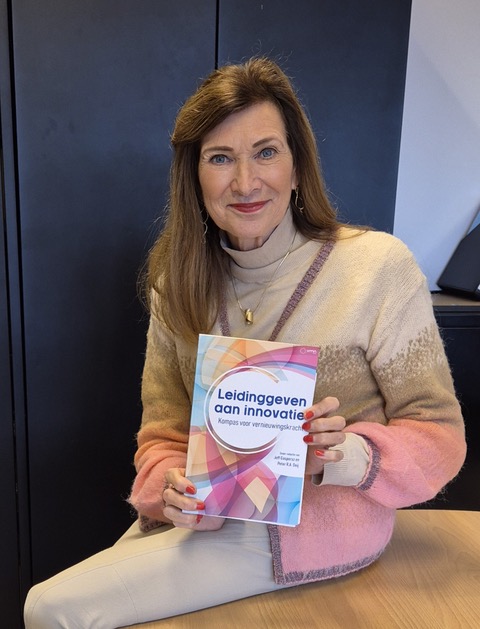
Annemieke Roobeek, Professor for Strategy and Transformation Management at Nyenrode Business Universiteit, is a re-knowned speaker and lecturer, and is an entrepreneur, with several companies. She works on complex projects around networking and building ecosystems. Next to that, Annemieke has years of experience as non-executive director in companies as Eneco, ABN AMRO, KLM, Abbott, and currently at Randstad.
Which gap needs the most attention, Annemieke, looking at the sustainable goals?
“I think the skills gap needs to be focussed on. In the past 30 years we learned so much more with the knowledge revolution and we keep ourselves busy with all kinds of programs at universities and institutes of learning. But… what needs to be done, is to make the translation from what you learn from books or conversations with others, tot practice. Therefore, you need skills.”
“As a professor at the University of Amsterdam I set up a project which was called Learning whilst Working and Working whilst Learning; LWWL. It fits close to what Rob van Tulder did with his Skills Guide. Skills are not an ability of your intelligence but they’re about ‘how to dó it and how to make knowledge actionable?’. You can see how others do it, you can join and learn others to be better in skills. It’s the most democratic way or learning.”
What’s the role of partnerships in this transformation from knowledge to skills?
“Well, innovation is only possible if you have the attitude of networking with diverse partners. So, you have to put the big questions or challenges in an ecosystem-setting with highly diverse parties from public and private, NGO’s, startups, etc.. This collaboration process gives a special role to the ecosystem leaders. I call them the Webbers. They are the ultimate connectors, applying their collaborative and connecting skills to reach the purpose all the different stakeholders have for the common goal.“
What do we need to do ourselves, to work on this big questions or challenges?
“In times of transformation we have to change our attitude and leadership behaviour. In the last 30 years we had a very selfish ‘me me me’ attitude. Whereas the problems are more about ‘we, together and collaboration’. To make that step together, you have to work on that personal behaviour as well. Being open, listening to the other, try to understand the other and then come up with better ideas together.”
I really like what you’re saying. Is this also what education can offer?
“In all faculties of the university of Amsterdam, the LWWL project pinpointed to that what universities never do; taking practice from outside seriously. Working at Nyenroode for 30 years as well, I know the value of practice to understand complexity, but at Nyenrode Business Universiteit it is common ground that we lecture about the interaction of theory and practice.”
“Not theorising on complexity and finding a case study next to it. No, the real challenge is in society. Take as an example the energy transition that cannot be solved without many parties from business, but particularly society, such as housing corporations, municipalities and the finance industry. If you understand the complexity and can translate this in practice,then you can make it more actionable and work on it with very different skills of people that complement each other to solve the bigger challenge together.
There are great projects but often still elite. Whereas the problems are in the pluralistic society. We have to find more parallel answers to the same goal to engage as many people as possible.”
From that point of few, where to start?
“For example by questioning the business model of our state funded universities. They earn money by making the subjects smaller and smaller, to get more and more PhD’s. Whereas with less PhD’s and more engaged students and professors with skills from practice, we can do so much more for society in addressing the bigger issues instead of the compartimentalized subjects most PhD’s have to work on nowadays for the universities business model.”
“Universities should look in the mirror, together with the business schools and make themselves more valuable for society. I worked a lot on valorisation of academic knowledge at the technical universities and saw that universities failed enormously on valorisations in science and insights, whereas society can benefit from academic knowledge if it combined with societal and business challenges. We have to focus together on the big problems and challenges of this time.”